
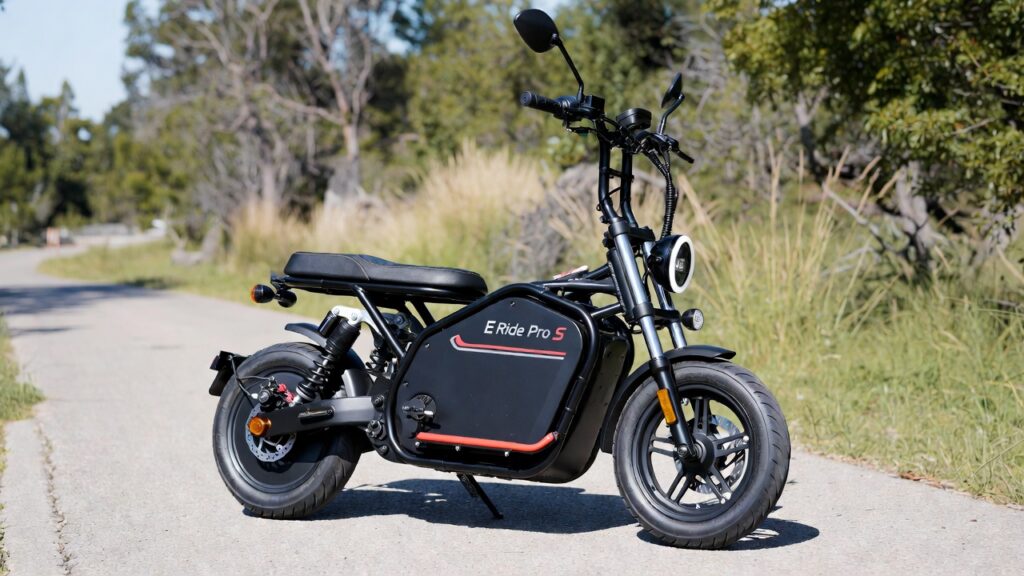
Everyone who sells you on riding through cold weather glosses over the actual experience, focusing on the highlight-reel moments instead, so here’s what a full winter on an E Ride Pro S actually looked like, complaints and surprises included, without the usual gloss most reviews add on top.
Cold Cuts Into Range More Than Any Spec Sheet Admits
The manufacturer numbers assume mild conditions, and nobody tells you upfront how much a freezing morning eats into that figure before you’ve even left the driveway. On an E Ride S, I noticed a real drop in usable range once temperatures dropped consistently below freezing, sometimes losing close to a quarter of what I’d get on a mild autumn day covering the same terrain and riding at the same pace.
That’s not a flaw specific to this bike — it’s just battery chemistry behaving the way batteries behave in the cold, something I understood in theory long before I felt it firsthand on a ride that ended shorter than planned, turning back earlier than I’d wanted to. Once I adjusted expectations and started charging a bit more before longer winter outings, it stopped being a surprise and just became part of the routine, no different than checking the weather beforehand.
Grip and Traction Demand a Completely Different Mindset
Summer riding lets you get away with a certain amount of carelessness on throttle input, especially with the instant torque this bike delivers off the line without any hesitation or ramp-up to speak of. Winter riding punishes that same habit almost immediately. Packed snow and half-frozen mud change how the rear wheel breaks loose, and I had to consciously relearn throttle discipline I thought I’d already mastered months earlier, back when traction wasn’t something I had to think about at all.
A few adjustments that made cold-weather riding noticeably safer, learned mostly through trial and error rather than any manual or forum post I came across beforehand:
- Lower tire pressure for better contact on loose or icy surfaces
- Softer, more gradual throttle application from a dead stop
- More frequent stops to check brake and drivetrain function in freezing temps
None of these adjustments felt dramatic on their own, but together they turned a genuinely risky season into one where I mostly just rode with a bit more caution baked into every ride.
Storage Between Rides Became Its Own Small Ritual
This part surprised me the most, more than the range drop or the traction issues combined, mostly because I hadn’t thought about it at all until it actually happened. Leaving the battery in a cold garage overnight noticeably affected cold-start performance the next morning, something I hadn’t anticipated when I first brought the bike home in warmer weather and never thought twice about where I parked it. Bringing it inside, even just for the coldest stretches, made a measurable difference in how the bike behaved on that first ride of the day.
It became a small habit rather than a chore — carrying the battery in after a ride, letting it acclimate before the next outing, treating it a little more like a phone battery than a gas tank that just sits there unaffected by the weather outside, indifferent to whatever temperature the garage happened to be that particular night.
By the end of that first real winter, my opinion of riding an E Ride Pro s in the cold had shifted from cautious skepticism to genuine confidence, just with a slightly different set of habits than the ones I’d built during warmer months when none of this even crossed my mind.